Every job below is one we do ourselves across Huber Heights.
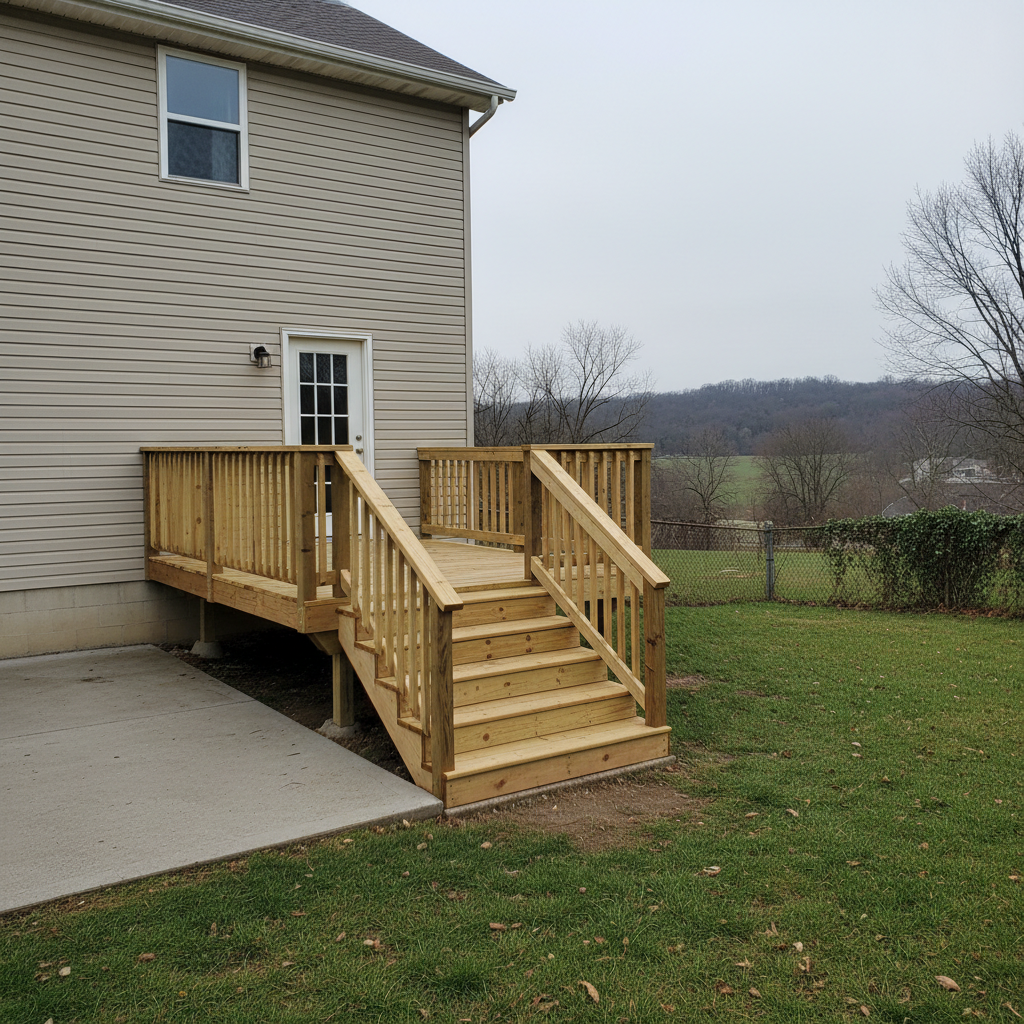
We frame new decks with pressure-treated joists on concrete footings poured below the frost line, so the structure doesn't heave in winter. Ledger boards get flashed and lagged into the rim joist, not just nailed through the siding. You pick the decking material and railing style, we handle the layout and the permit.
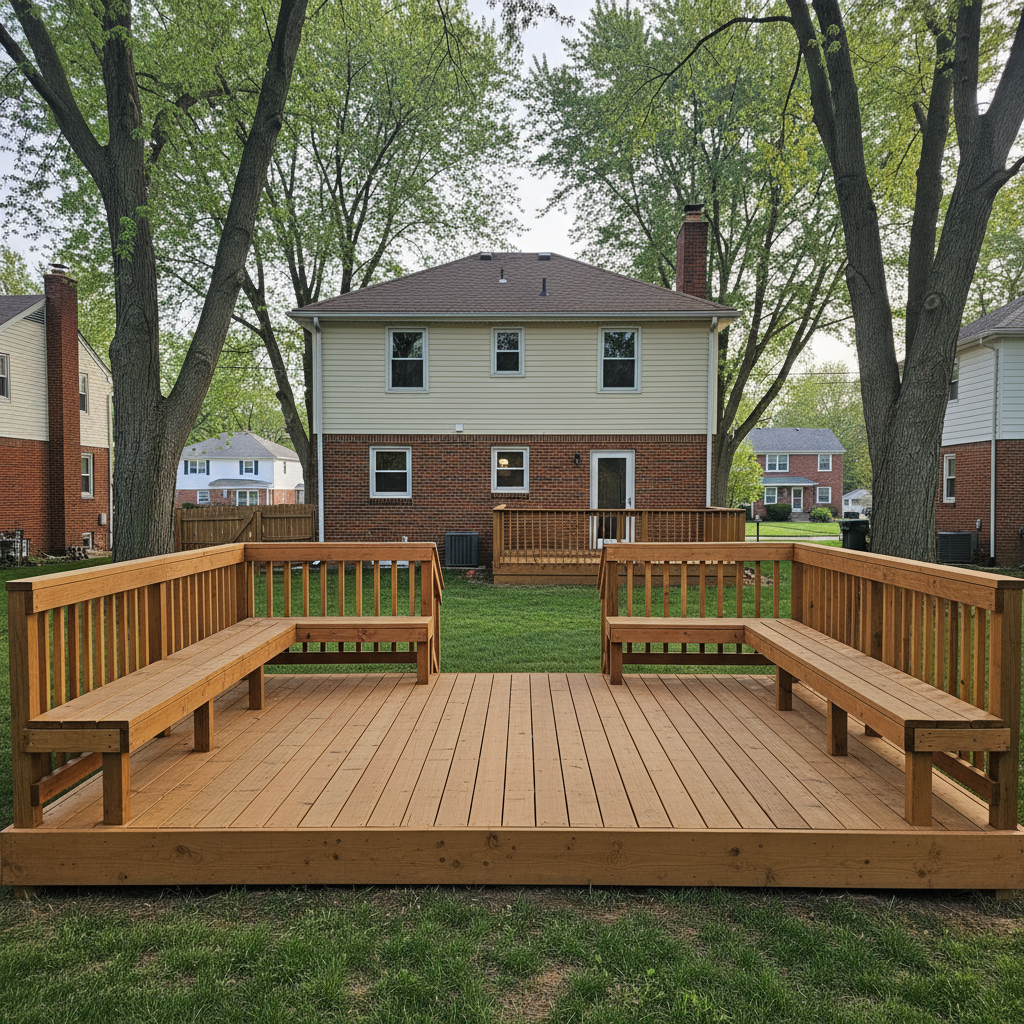
Some lots need a deck that steps down with the grade or wraps around a tree instead of a straight rectangle off the back door. We sketch the layout with you, work out the footing locations, and figure out stairs and railing before any lumber gets cut. Multi-level decks and built-in seating add framing time, and we'll say so up front.
A soft spot in the decking, a post that's started to lean, or a railing that moves when you lean on it usually means something underneath has rotted or come loose. We pull the bad boards or hardware, check the joists and posts behind them, and replace only what's actually failed. Sometimes that's three boards, sometimes it's the whole frame, we won't know until we open it up.
Wood decking left bare grays out and starts to cup within a couple of summers in this climate. We pressure wash, let it dry out fully, sand down any rough spots, then apply a stain and sealer rated for UV and standing water. Plan on doing this again every two to three years depending on sun exposure.
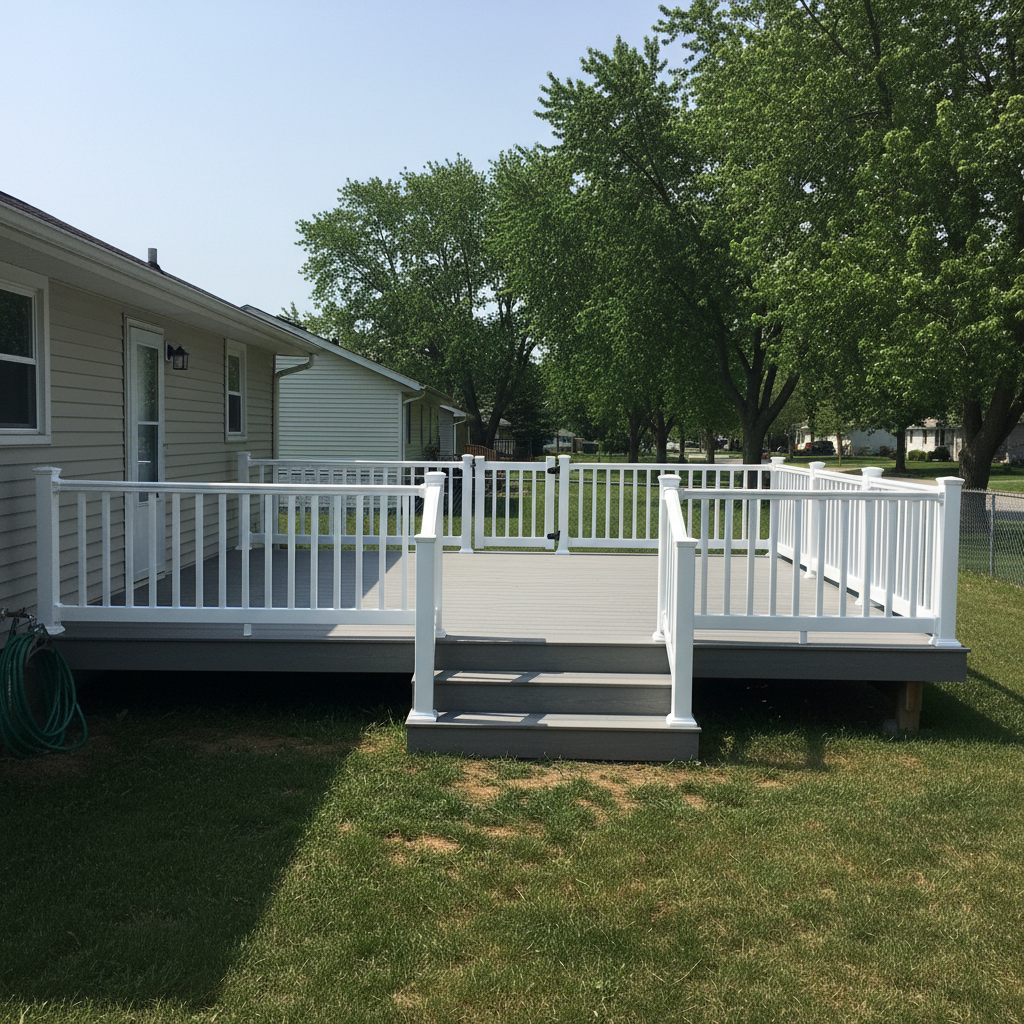
Composite boards skip staining entirely and won't splinter, which is why a lot of homeowners switch over during a rebuild. We still frame it the same way underneath, with proper joist spacing and hidden fastener systems so there's no screw heads showing on top. It costs more per square foot than pressure-treated pine, but there's nothing to maintain after.
Loose balusters, a top rail that wobbles, or spacing wider than code allows, we fix all of it. Ohio building code wants gaps under 4 inches so a small kid can't get a head through, and a lot of older decks don't meet that anymore. We can rebuild just the railing without touching the decking if the frame underneath is still solid.
If the frame is still sound but the decking itself is cupped, splintering, or rotted through in spots, you don't need a whole new deck. We pull the bad boards, check the joists underneath for soft spots while they're exposed, then replace with matching or upgraded decking.
Old decks get torn down and hauled off, including any buried footings if you're planning something different in that spot. We check first whether the existing frame is worth keeping before we demo it, sometimes resurfacing costs less than a full rebuild.
A pergola or a roofed section over part of the deck cuts down on how much sun and rain the boards take directly, which slows fading and warping. We frame these into an existing deck or build them as part of a new one, sized to actual rafters and snow load, not just eyeballed.
This is the part nobody sees once the boards go down, joists, beams, posts, and the footings they sit on. If a deck feels bouncy or uneven, the problem is almost always here rather than in the decking itself. We get underneath it, check for rot and undersized framing, and rebuild to current code if what's there won't hold.
Four steps, and no surprises in any of them.
You tell us what you want doing, we look at what is actually there, and we ask the awkward questions early.
In writing, itemised, free. If something might add cost later we flag it now rather than at the end.
Same crew throughout. We cover your floors, keep the dust down and tidy up before we leave each day.
You point out anything you are not happy with and we fix it before the invoice, not after.
Deck installation and repair covers Huber Heights and the towns around it.
Questions that come up once a deck project is underway.
Describe the problem and we will tell you what it probably is. No obligation.