
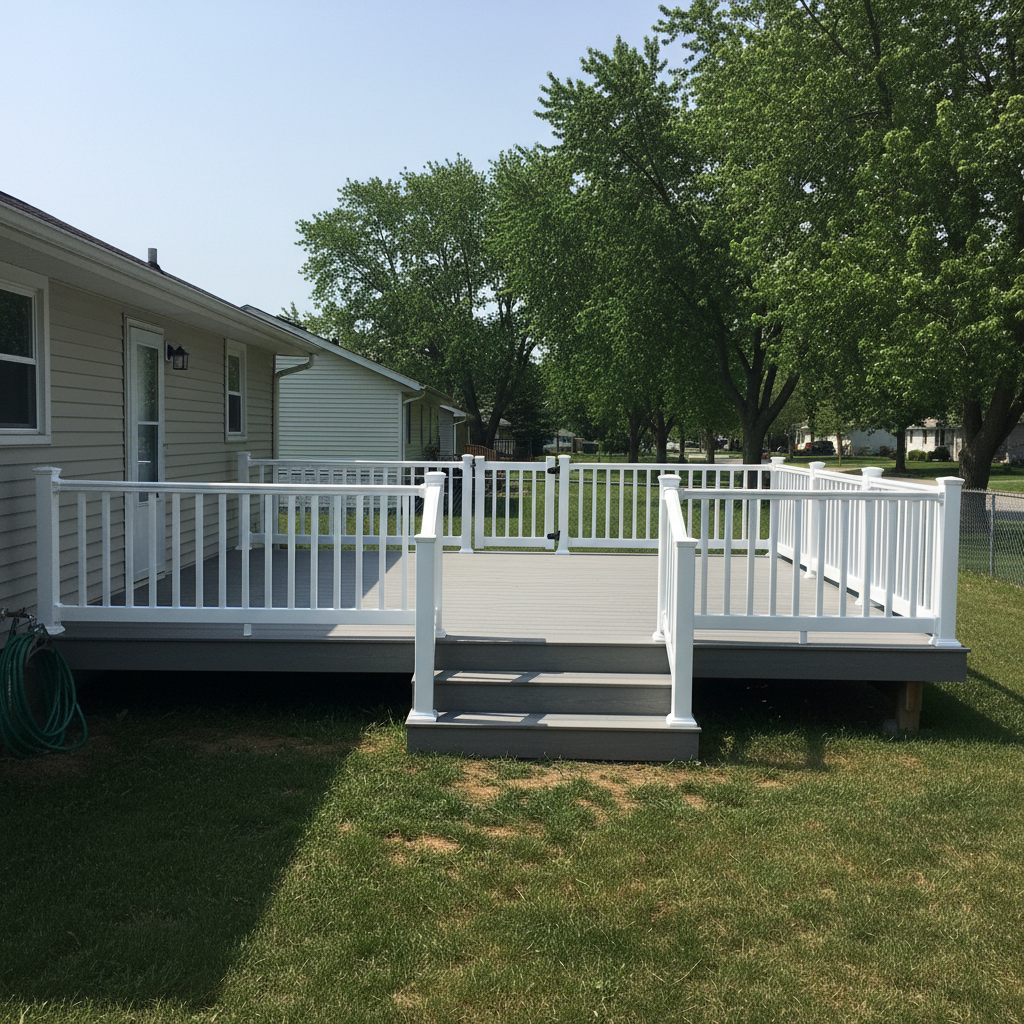
A deck is one of the few home projects where the mistakes are buried in the ground or hidden under the boards, and you won't find out about them until year three or four when a post heaves out of the clay or a ledger board pulls away from the rim joist during a party. Picking the right builder matters more here than it does for, say, a fence. Here's what to actually check before you sign anything.
Ask about footing depth first. Montgomery County sits on glacial clay soil, and clay moves. It swells when it's wet and shrinks when it dries out, and in winter it heaves with frost. A footing that isn't dug below the frost line will work its way up over a few freeze-thaw cycles, and Ohio winters give you a lot of those, not just one hard freeze but dozens of thaw-and-refreeze swings between December and March. Local frost depth around Huber Heights runs about 32 inches. A builder quoting footings at 18 or 24 inches is either guessing or cutting a corner you won't see until the deck starts to rock.
What a real bid looks like
A serious quote names the post size, the footing diameter and depth, the joist spacing, and whether the ledger board gets flashed and through-bolted or just lag-screwed. It should say what grade of lumber (pressure-treated pine is standard for framing even under composite decking) and whether joist hangers and structural screws are galvanized or stainless, because the wrong hardware in treated lumber corrodes from the inside out within a few years. If the quote is one lump number with no breakdown, that's not a bid, that's a guess with a dollar sign on it.
- Footing depth and diameter, in writing, not just "to code"
- Ledger attachment method, especially flashing against the house wall
- Joist and beam spans matched to the decking material you're choosing
- Fastener type, since the wrong screw in ACQ-treated lumber will corrode
- Whether the permit and inspections are included in the price or your job
Permits aren't optional, and they protect you
Most attached decks in Huber Heights need a building permit, and the city or county building department will want a footing inspection before concrete gets poured and a framing inspection before the boards go down. That's not red tape for its own sake. The footing inspection is the one point in the whole project where somebody checks that you're actually below frost depth and bearing on undisturbed soil, not fill dirt from when the lot was graded. A builder who tells you permits "aren't really necessary for a deck this size" is asking you to skip the one inspection that catches a bad footing before it's covered in concrete. If your lot backs up to a subdivision with an HOA, which is common in the newer sections off Brandt Pike and out toward Bellefontaine Road, you'll also want the builder checking setback lines against your plat before digging, not after.
Older neighborhoods bring their own problems
Huber Heights grew fast through the late 1950s into the 1970s, and a lot of those original brick ranch homes still have the original concrete patios, old wood decks from a prior owner, or add-on sunrooms that were never engineered to carry a deck load. If you're replacing a deck that's 25 or 30 years old, expect the builder to find things the original crew didn't bother with: a ledger board nailed straight to siding with no flashing, posts set in soil with no footing at all, or joists sized for a hot tub nobody mentioned. Demolition and removal on these jobs often takes longer than people expect, because old treated lumber from that era sometimes used fasteners and chemical treatments that don't play well with newer hardware, and the whole thing has to come out clean before new framing goes in.
Newer subdivisions built since the 1990s tend to have better-compacted fill and more consistent grading, but they also tend to have shallower topsoil over clay fill, which means footing depth still matters just as much, sometimes more.
What the weather does to the work
Summers here get humid, and that affects more than comfort. Stain and sealant need the wood dry and the temperature in a workable range to cure properly, usually above 50 degrees and out of direct rain for at least 24 hours after application. A crew that stains a deck the same day it rained, or right before a forecasted storm, is setting you up for a blotchy, peeling finish within a season. Spring in this part of Ohio brings heavy rain in April and May, which is exactly when a lot of people want their deck built. A good builder plans footing pours around the forecast, not around their own schedule, because wet concrete and standing water in a footing hole don't cure right.
Red flags worth walking away from
A price that's dramatically lower than two or three other quotes almost always means something's missing, usually the footing depth, the flashing, or the permit. Ask to see proof of insurance, not just a license number recited over the phone. Be cautious of anyone who wants the full payment up front before any material is delivered. And if a builder can't tell you, specifically, how they're attaching the ledger board to your house, don't let them start. That single connection point is what keeps the whole structure from separating from the house, and it's also the single most common failure point on decks that get torn apart by an inspector years later.
A deck built right should give you 25 to 30 years out of the structural frame, longer if it's composite decking over pressure-treated framing with proper flashing and footings below frost depth. That's the standard worth holding any quote to. If you want a second opinion on an existing deck or a quote on a new one, that's the kind of work we do at Westbrook Deck Co, and we're happy to walk through the footing plan with you before anyone digs a hole.